![[Book #158478] Archive of correspondences, notes, forms, and other documents to and from Sam Peckinpah, circa 1970-1979. Sam Peckinpah.](https://royalbooks.cdn.bibliopolis.com/pictures/158478.jpg?width=768&height=1000&fit=bounds&auto=webp&v=1706261225)
Archive of correspondences, notes, forms, and other documents to and from Sam Peckinpah, circa 1970-1979
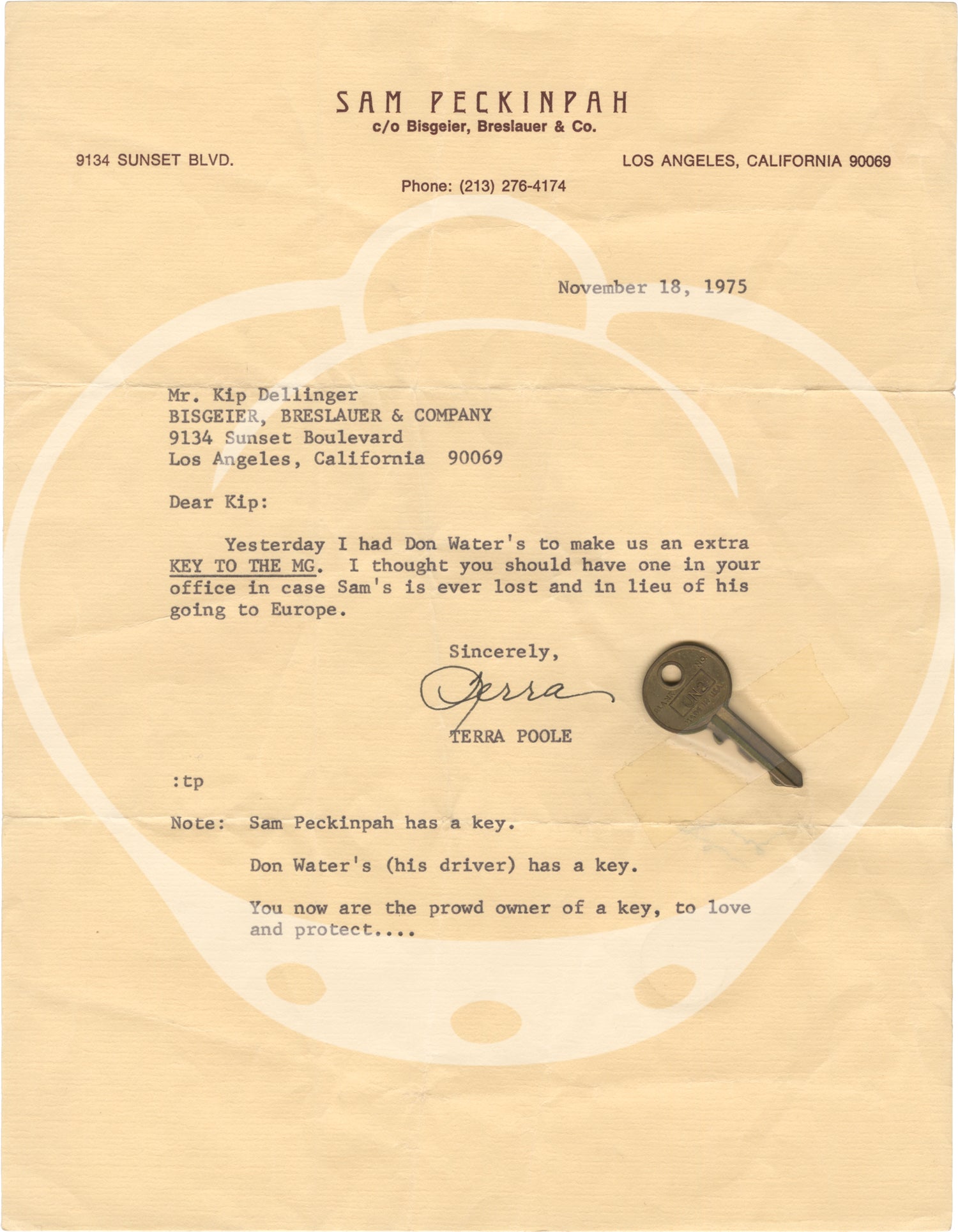
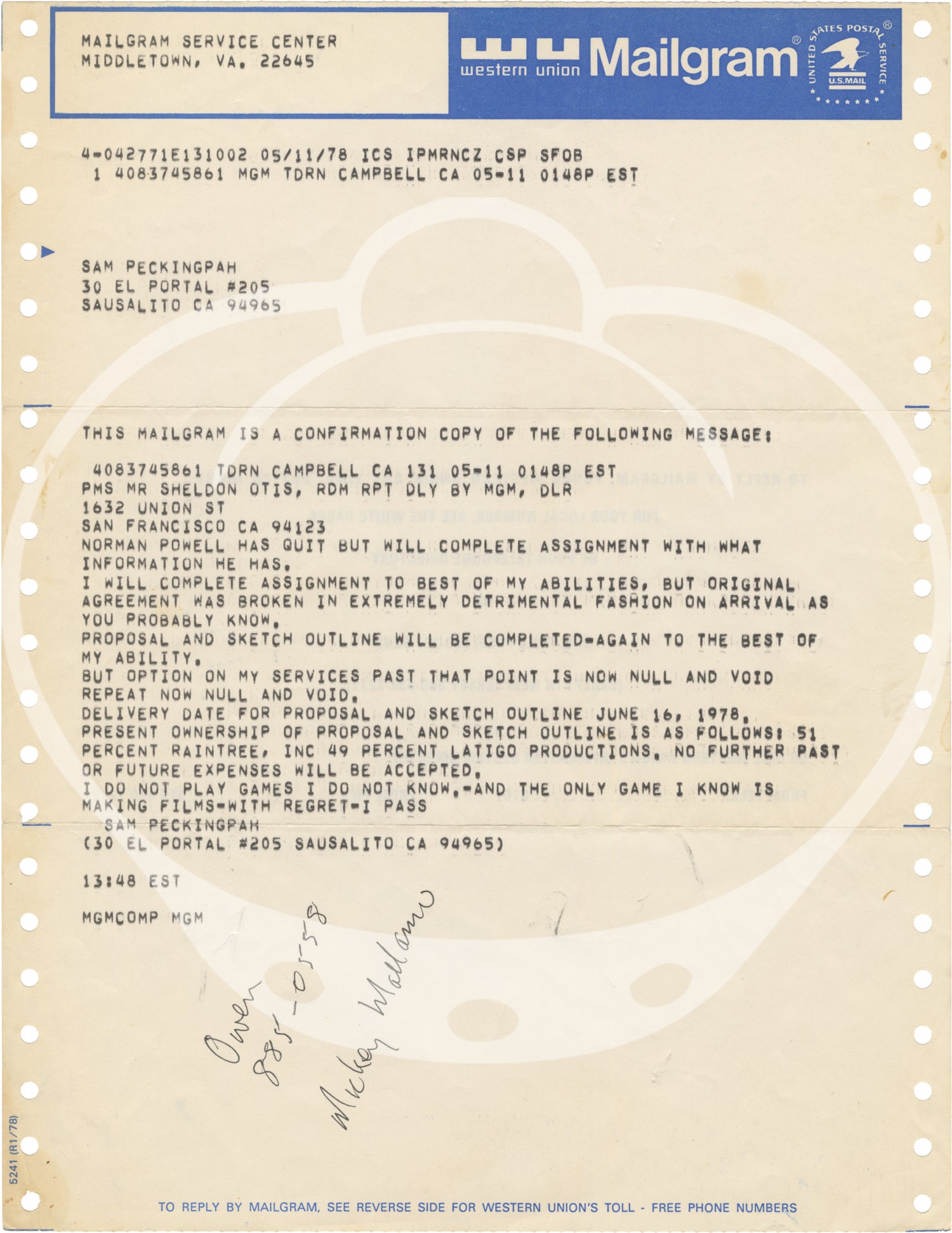
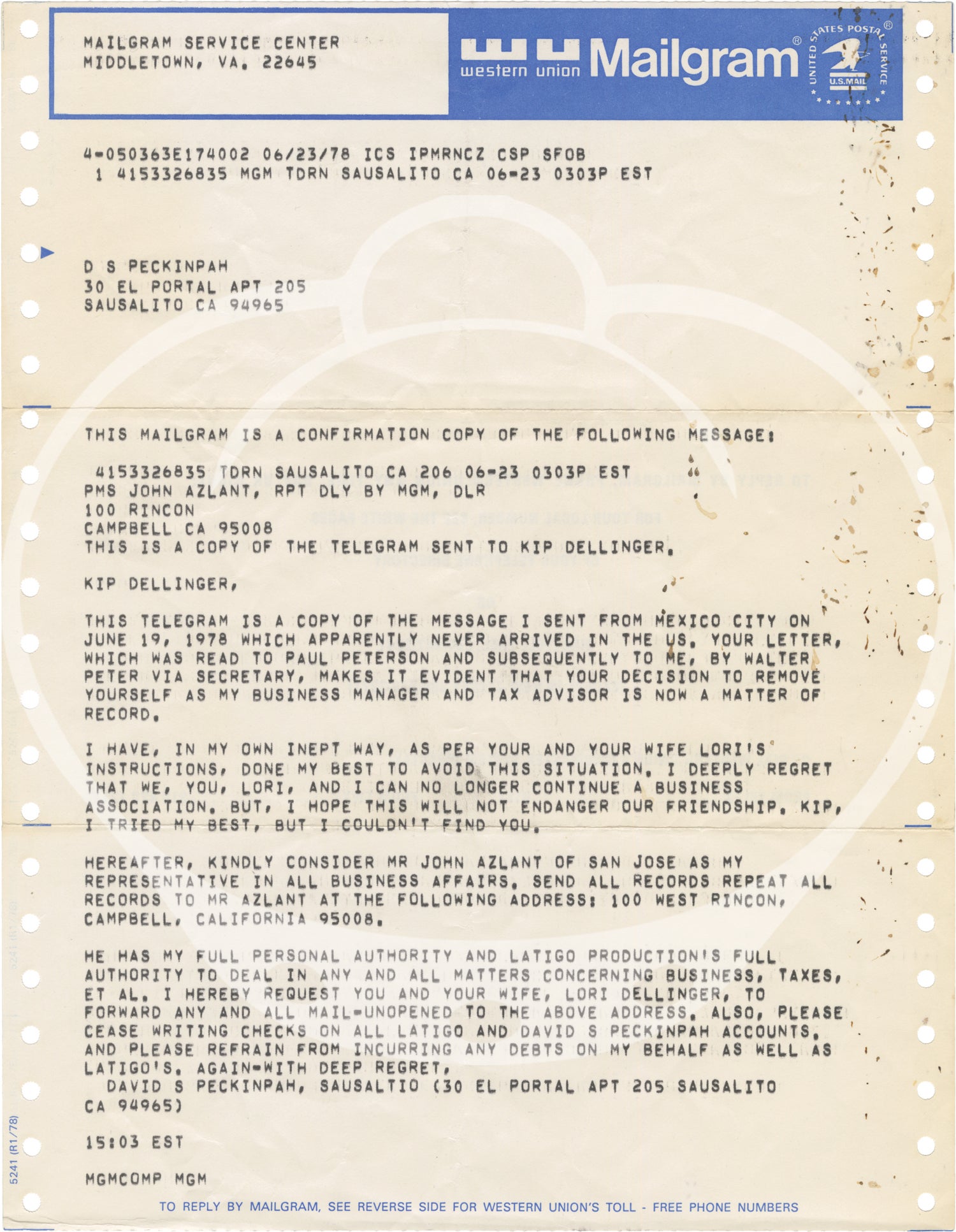
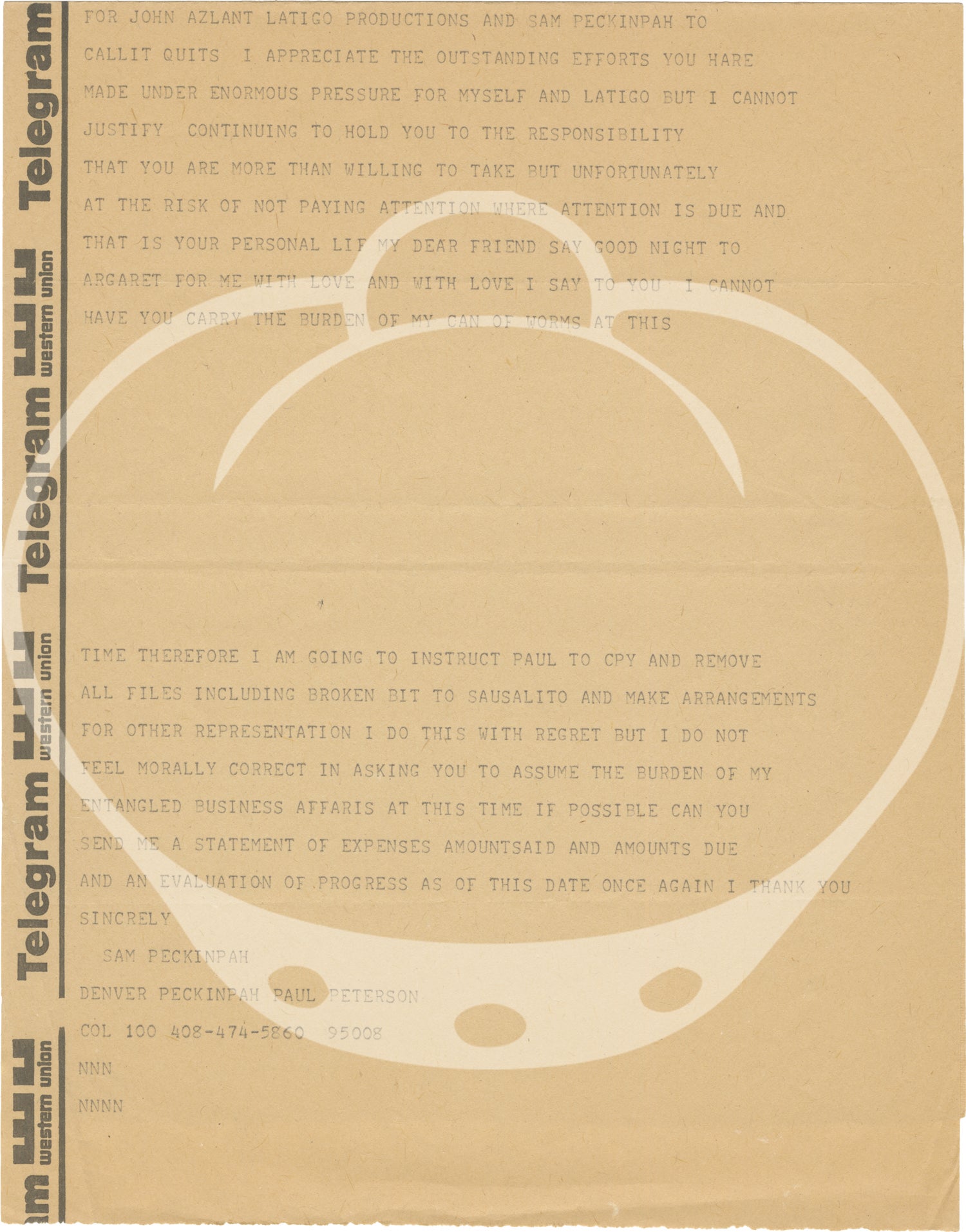
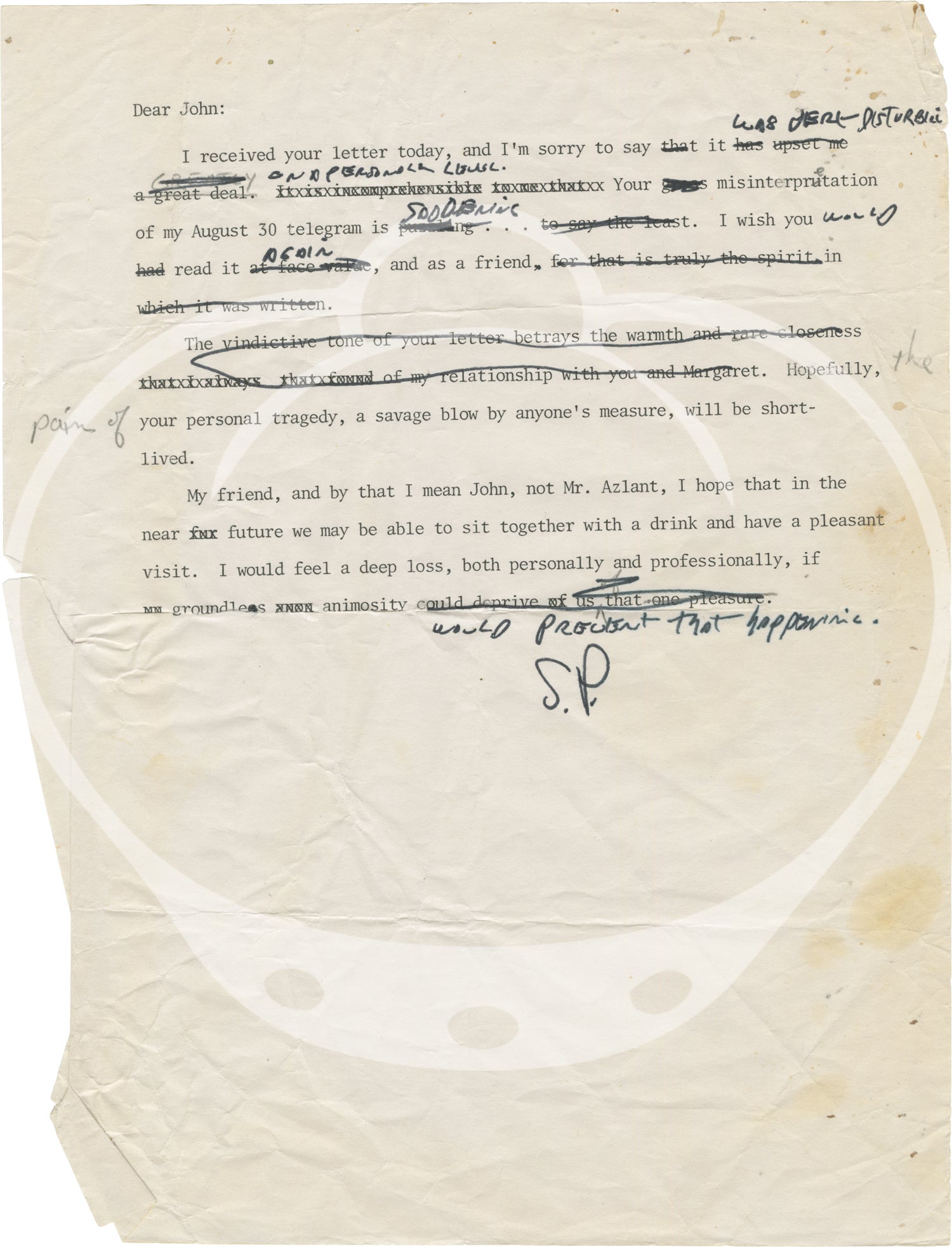
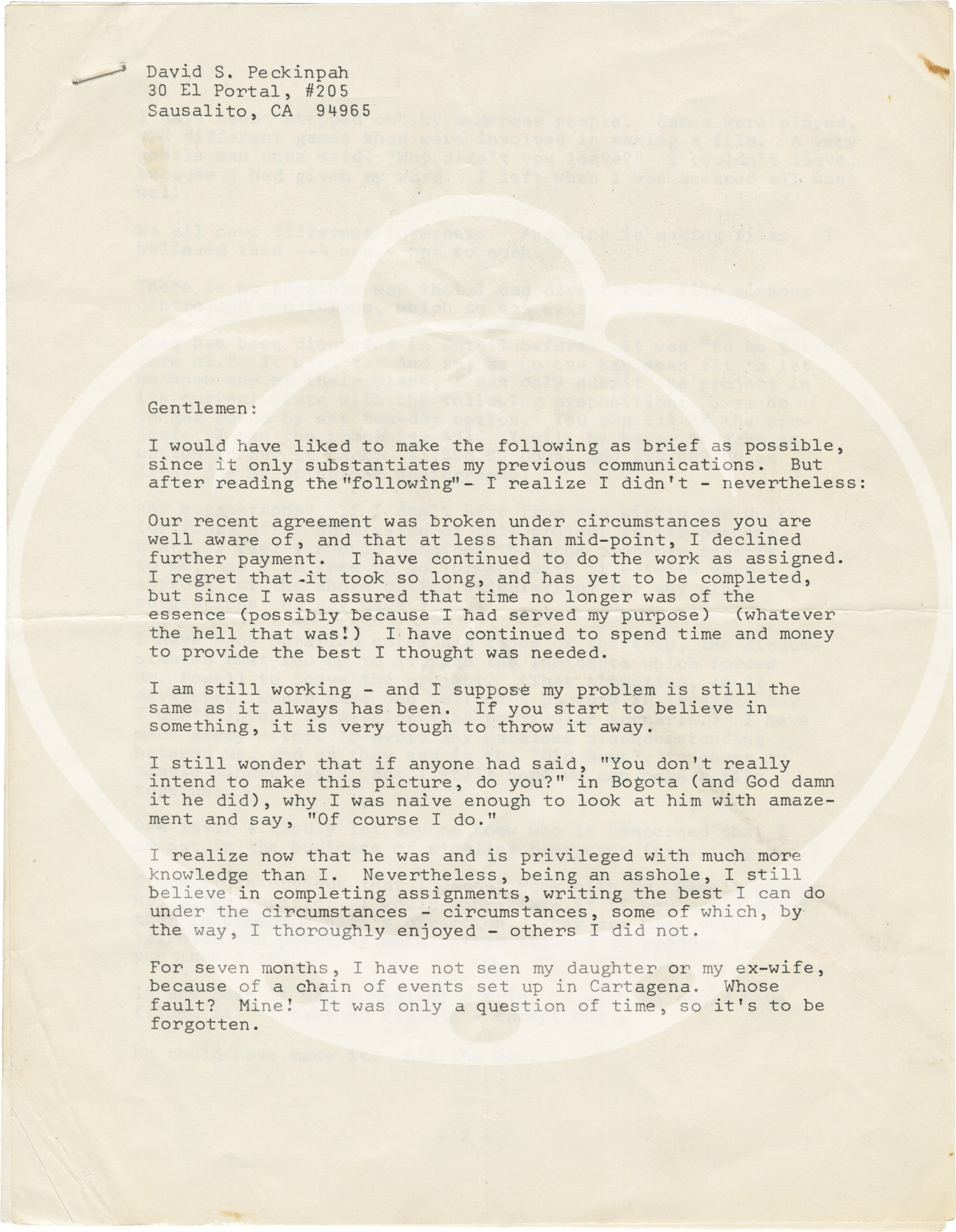
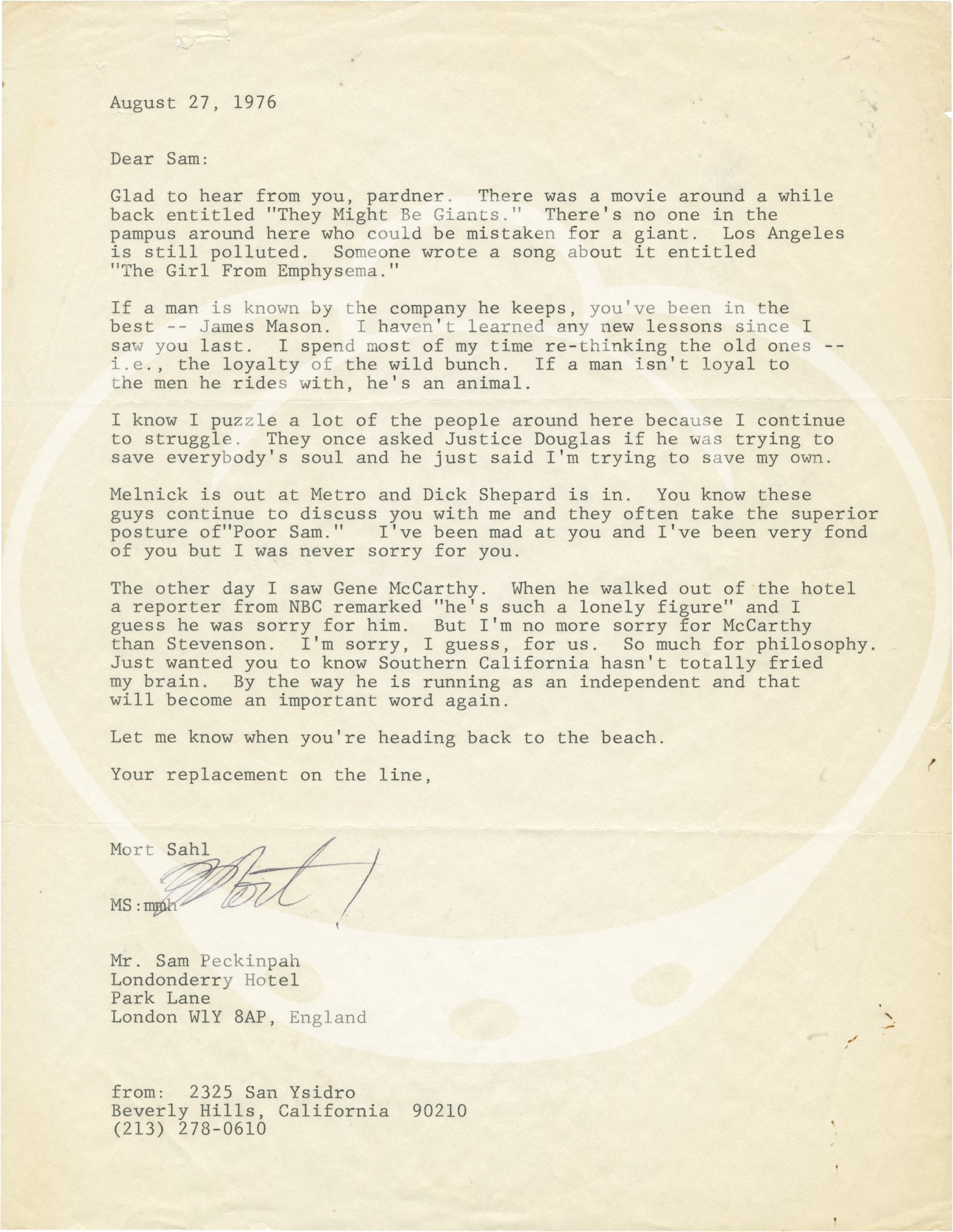
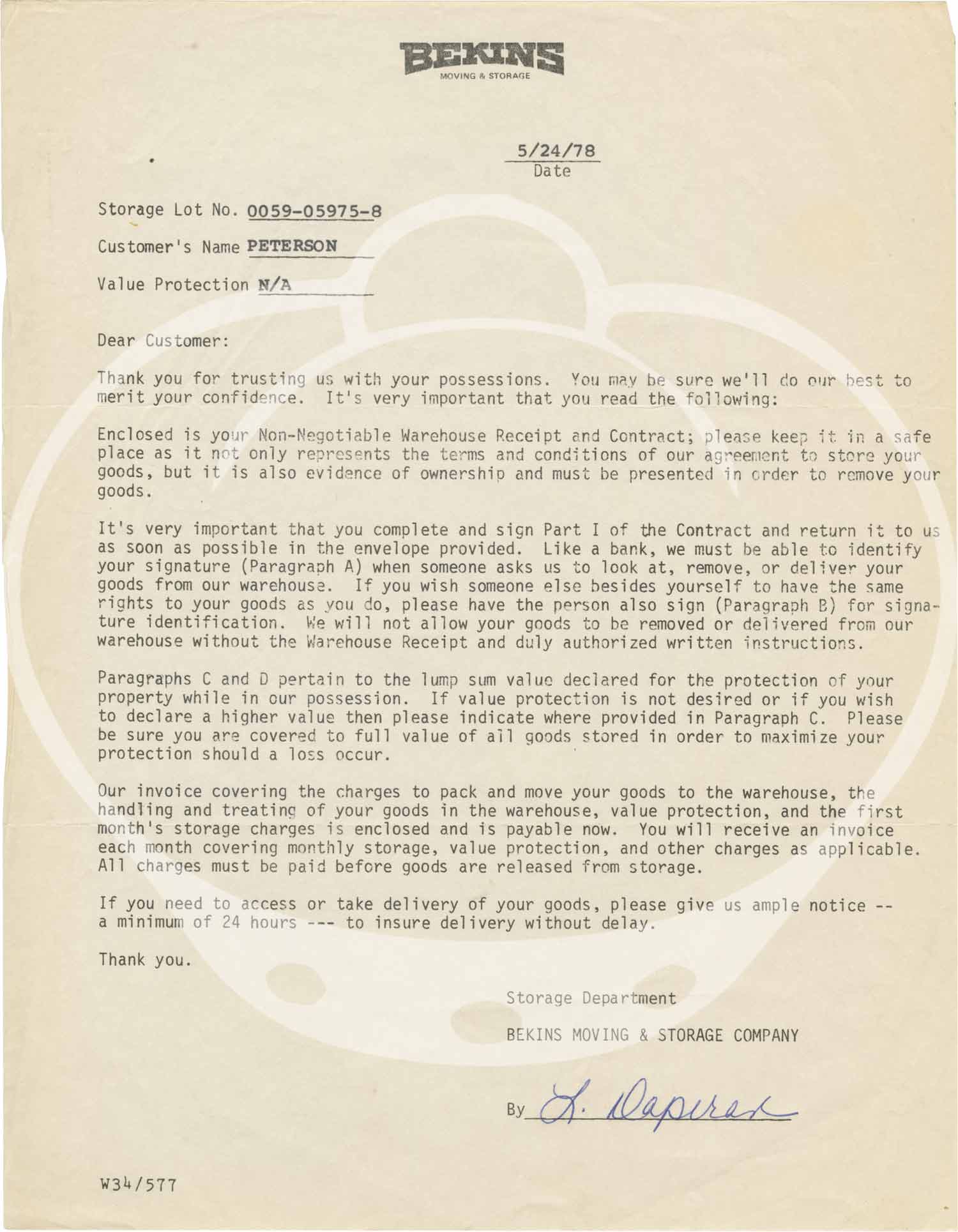
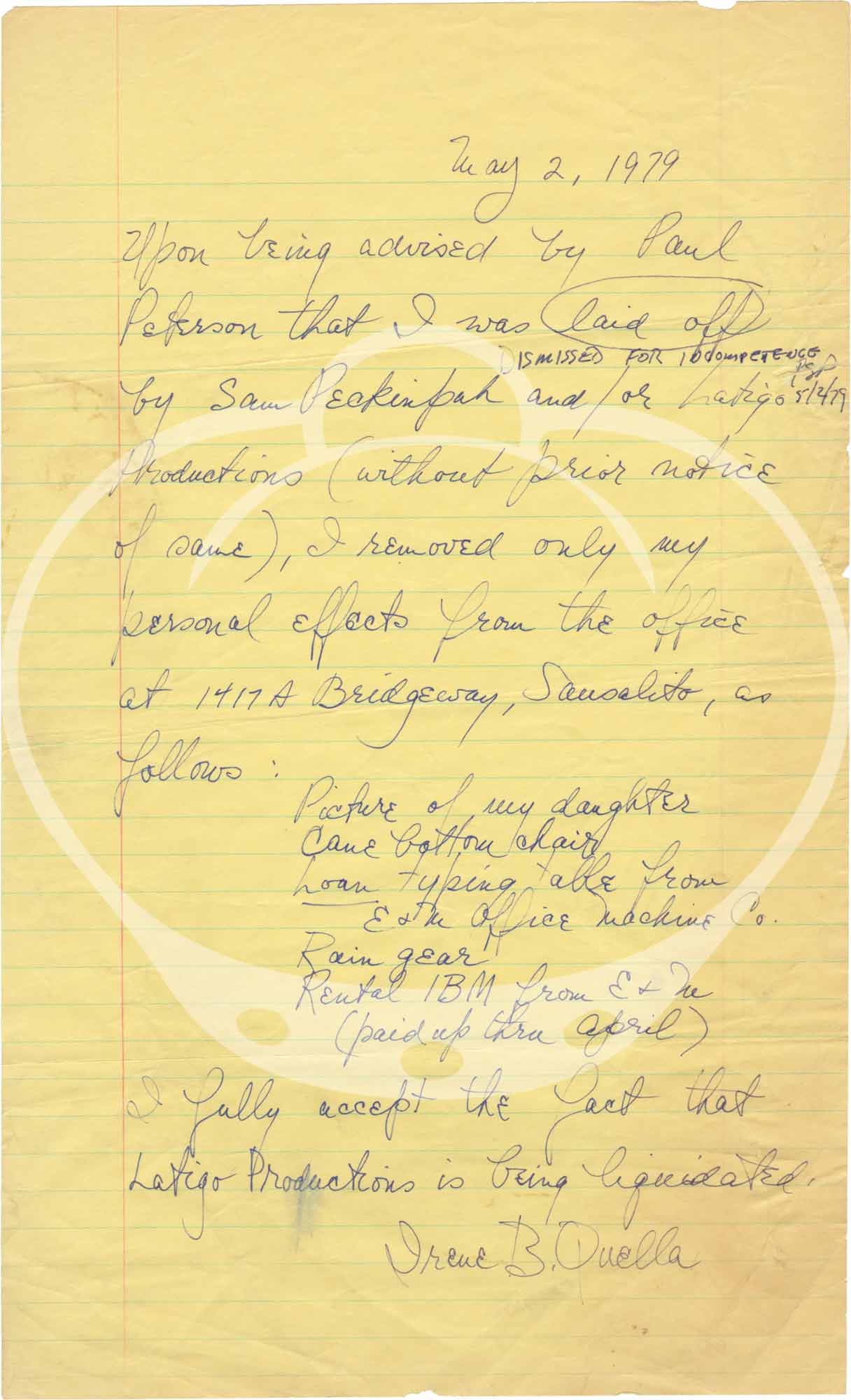
N.p. N.p., Circa 1970-1979. Archive of over three dozen documents, including letters, telegrams, mailgrams, notes, forms, and other ephemera to and from director Sam Peckinpah, circa 1970-1979, the majority of which dates from 1978. Most documents regarding the director’s then-current film projects, location research in Mexico and Columbia, and the dissolution of Peckinpah's production company Latigo Productions.
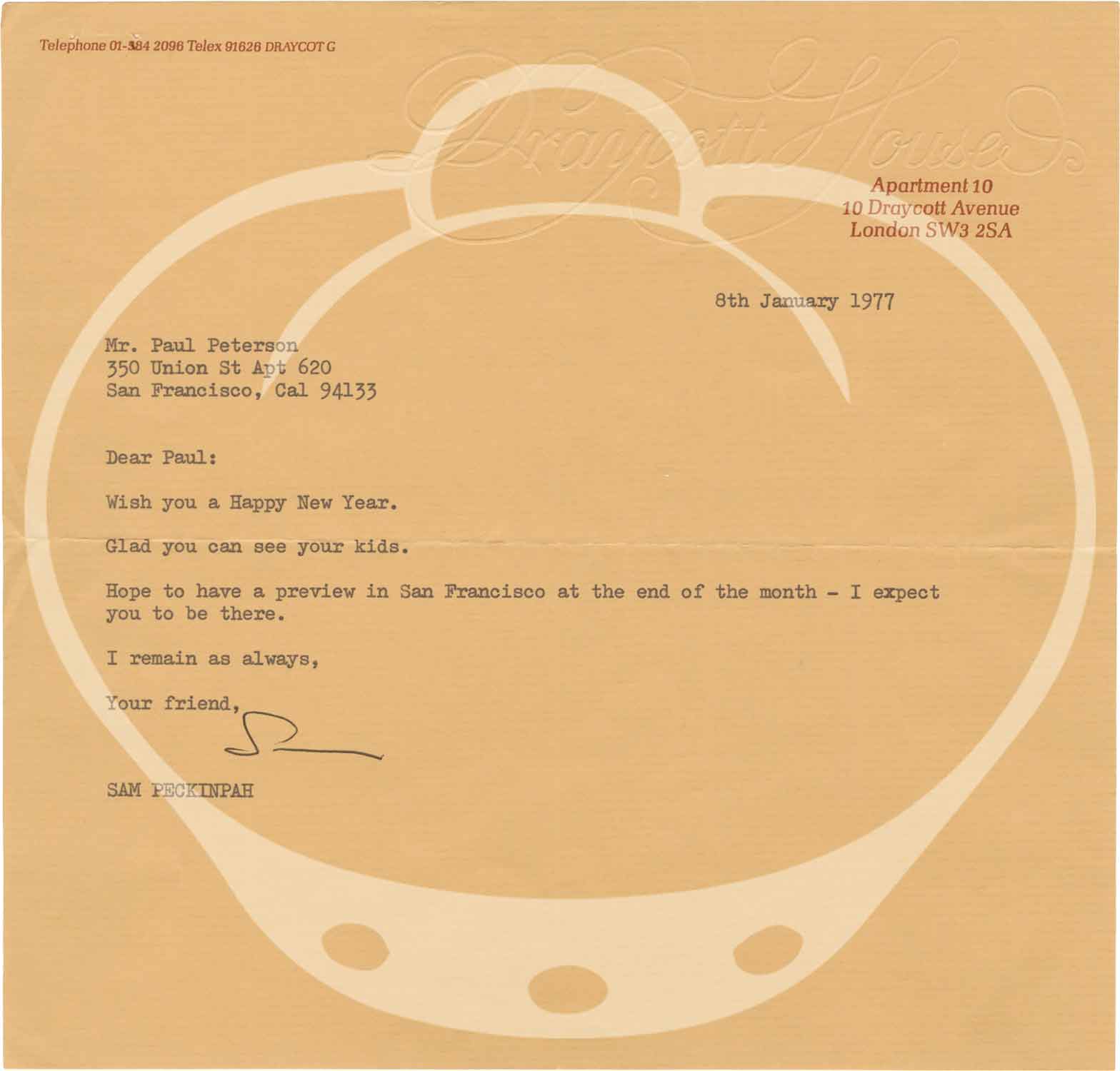
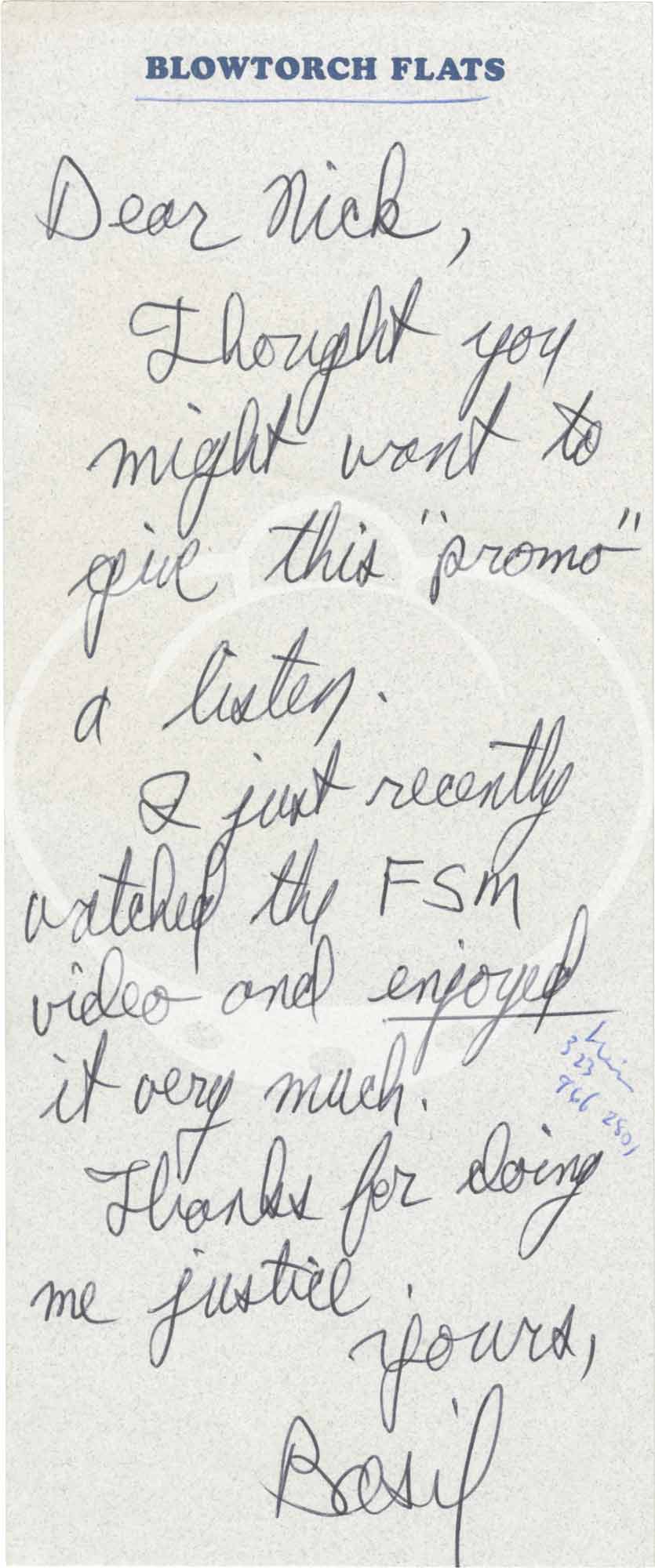
Included in the archive are: five autograph or typescript letters signed from Peckinpah, eight autograph or typed letters signed to Peckinpah, two autograph notes by Peckinpah, three mailgrams, two telegrams, and numerous documents, memos, forms, and receipts. Detailed inventory available upon request.
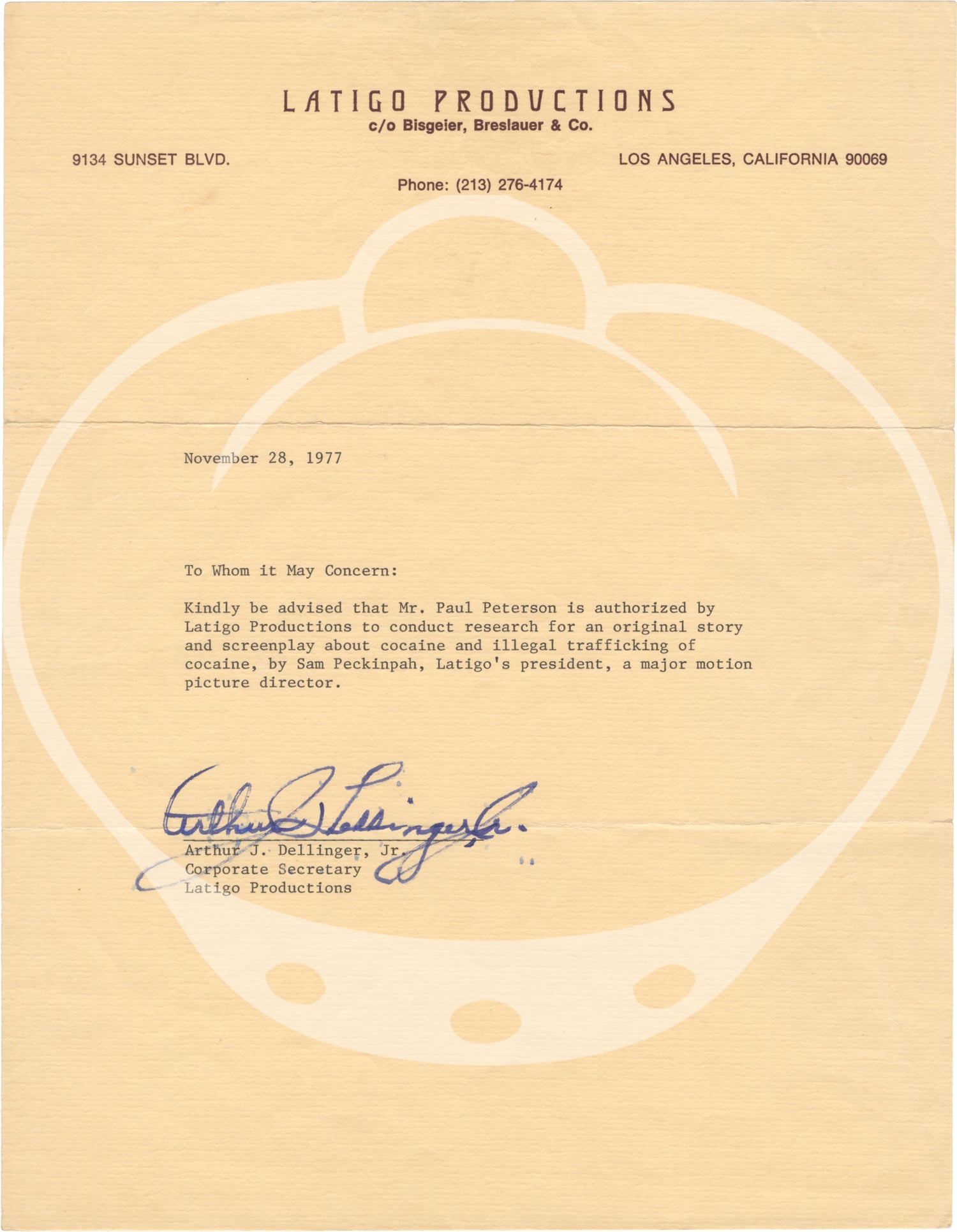
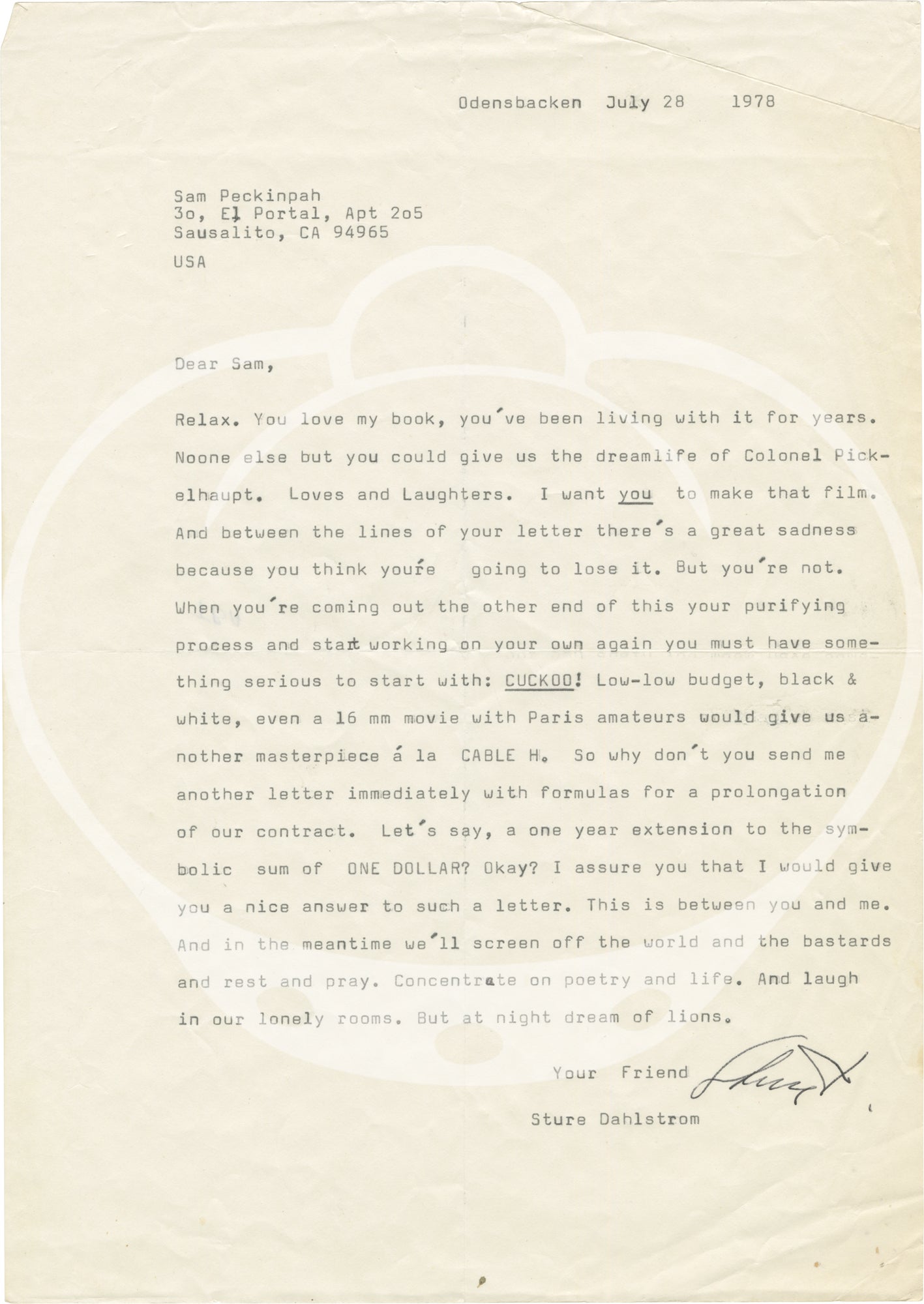
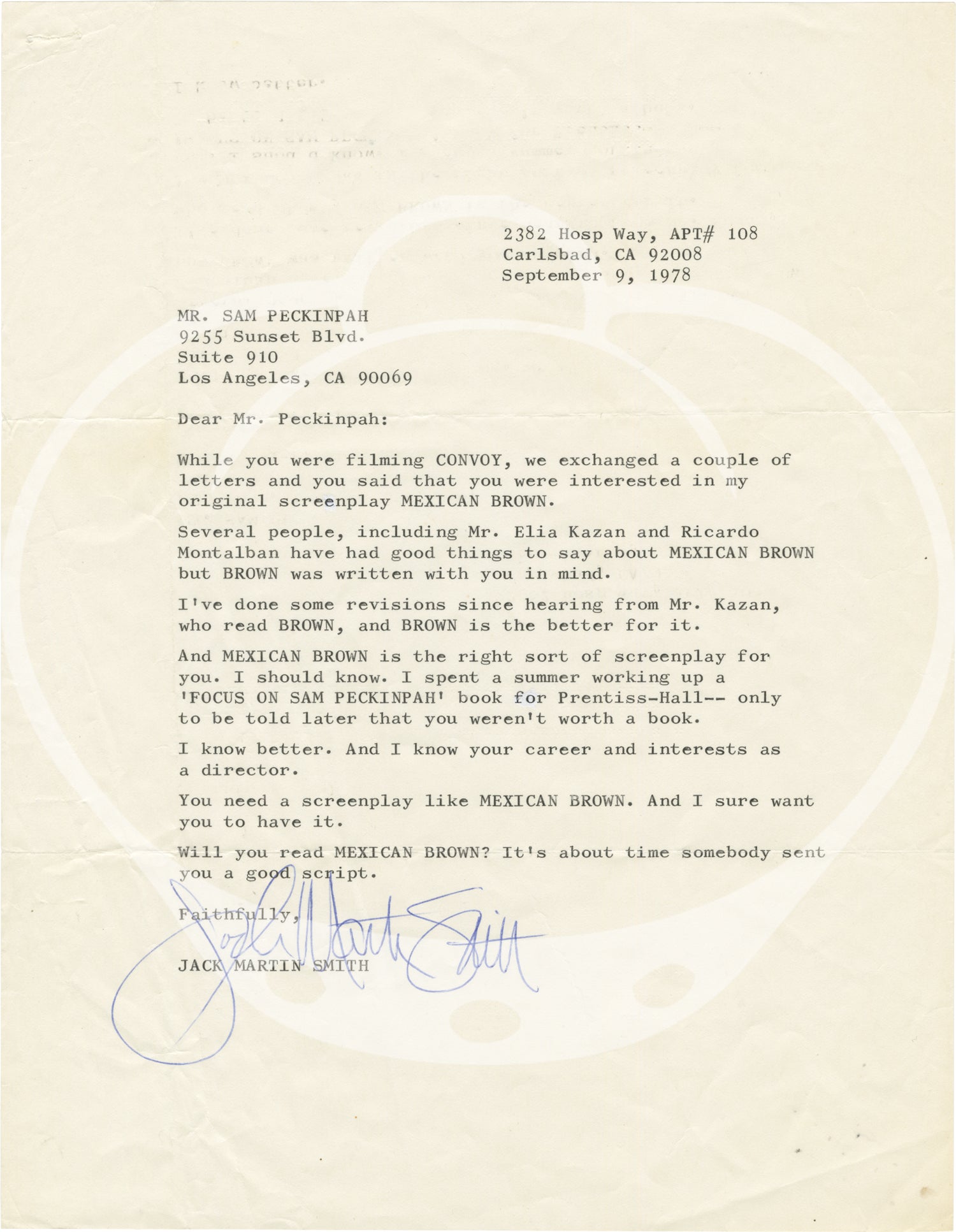
Among those with whom Peckinpah corresponds in the archive are his personal assistant Paul Peterson, Swedish author and composer Sture Dahlstom, author Jack Martin Smith, and comedian and actor Mort Sahl, as well as Peckinpah's legal counsel Kip Dellinger and Dellinger's wife Lori, Corporate Secretary Arthur J. Dellinger, Jr., and business manager John Azlant.
Most of the archive dates from 1978 during the post-production and release of Peckinpah's 1978 film "Convoy," and much deals with research and pre-production work for the projects "My Pardner and "Avalanche."
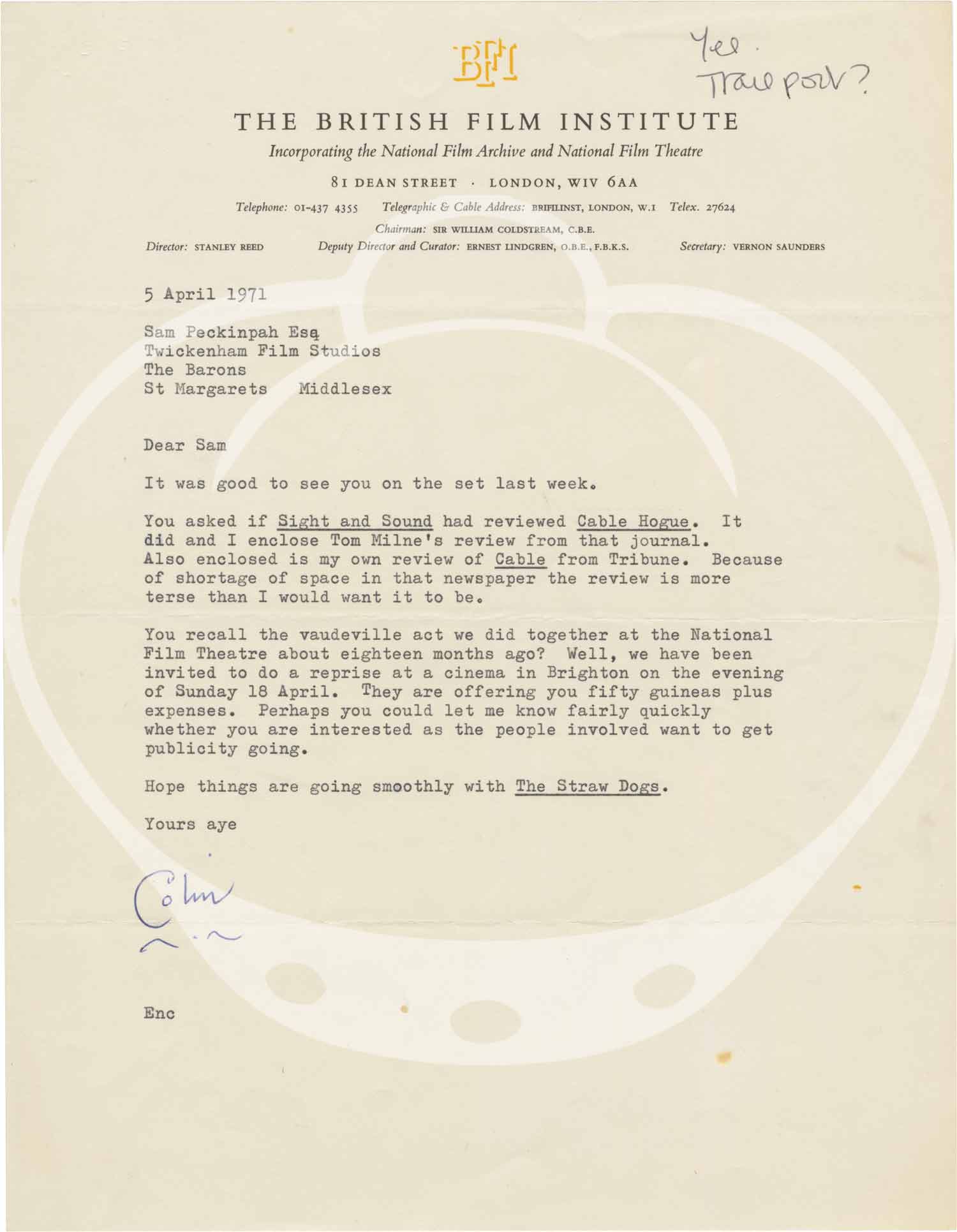
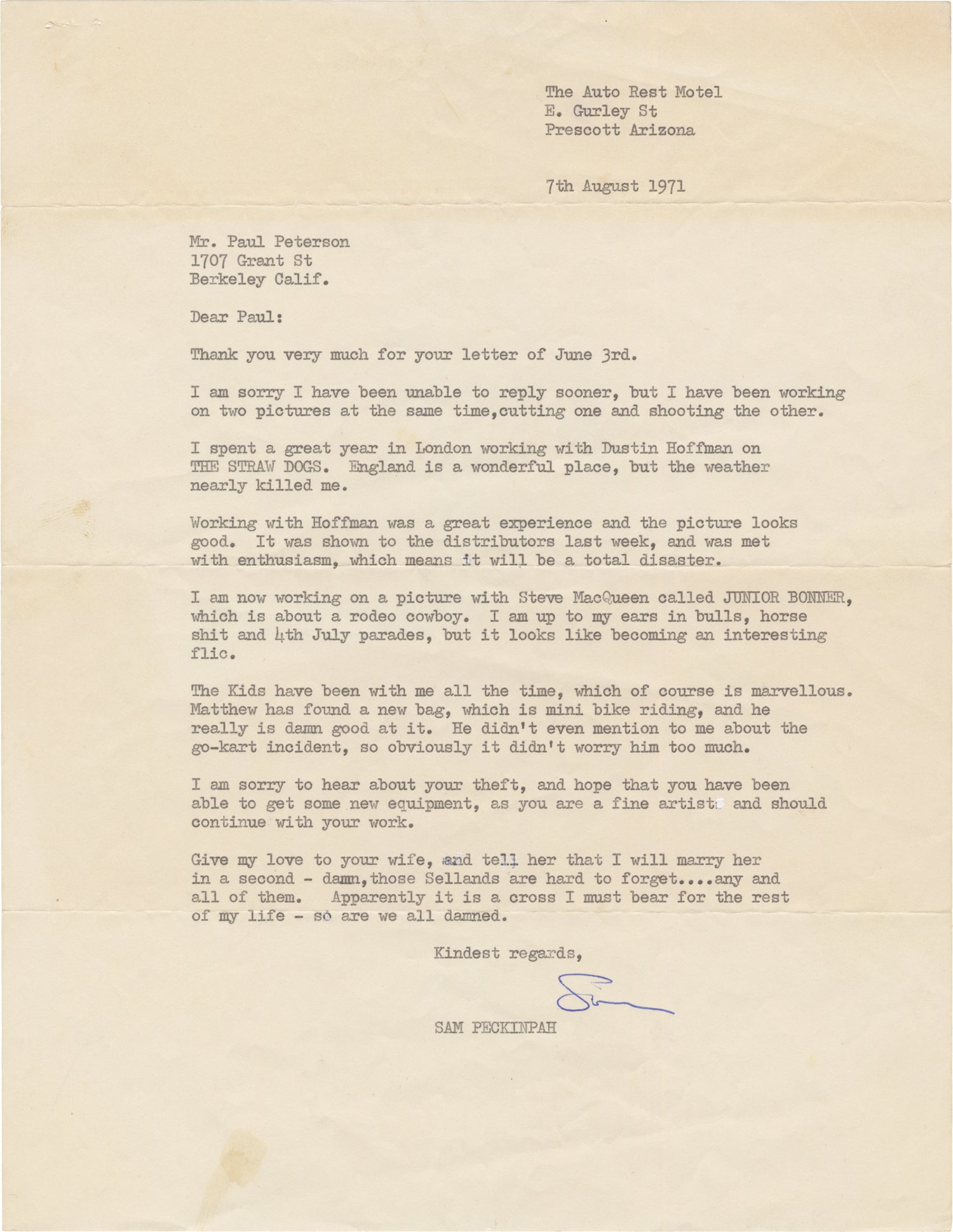
Among other items of note are two letters from 1971, written during the productions of his 1971 film Straw Dogs and his 1972 film "Junior Bonner," as well as a note addressed to Peckinpah’s assistant Peterson, authorizing him to "conduct research for an original story and screenplay about cocaine and illegal trafficking of cocaine." Other notes discuss contacts in Bolivia, as well as pitches for an unproduced film entitled "Mexican Brown," and a pitch for a "low-low budget, black & white, even a 16mm movie with Paris amateurs.”
An insightful archive, capturing a particularly difficult time for Peckinpah. Although "Convoy" was the highest grossing film of the director's career, the film was widely panned, and left Peckinpah virtually unemployable. It would be three years later, when Peckinpah accepted director Don Siegel's offer to direct second unit work for twelve days on the 1982 film "Jinxed," uncredited, that Peckinpah would again find work as a director, which led to the production of his final film, "The Osterman Weekend," in 1982.
All documents 8.5 x 14 inches or smaller. Near Fine overall.
[Book #158478]
Price: $3,500.00
See all items in: Archives, Directors, Film Ephemera, Letters, New Hollywood Cinema